
How to Optimize Sludge Dewatering in Municipal Sewage Treatment: Sourcing and Selection Guide
Sep 27, 2026
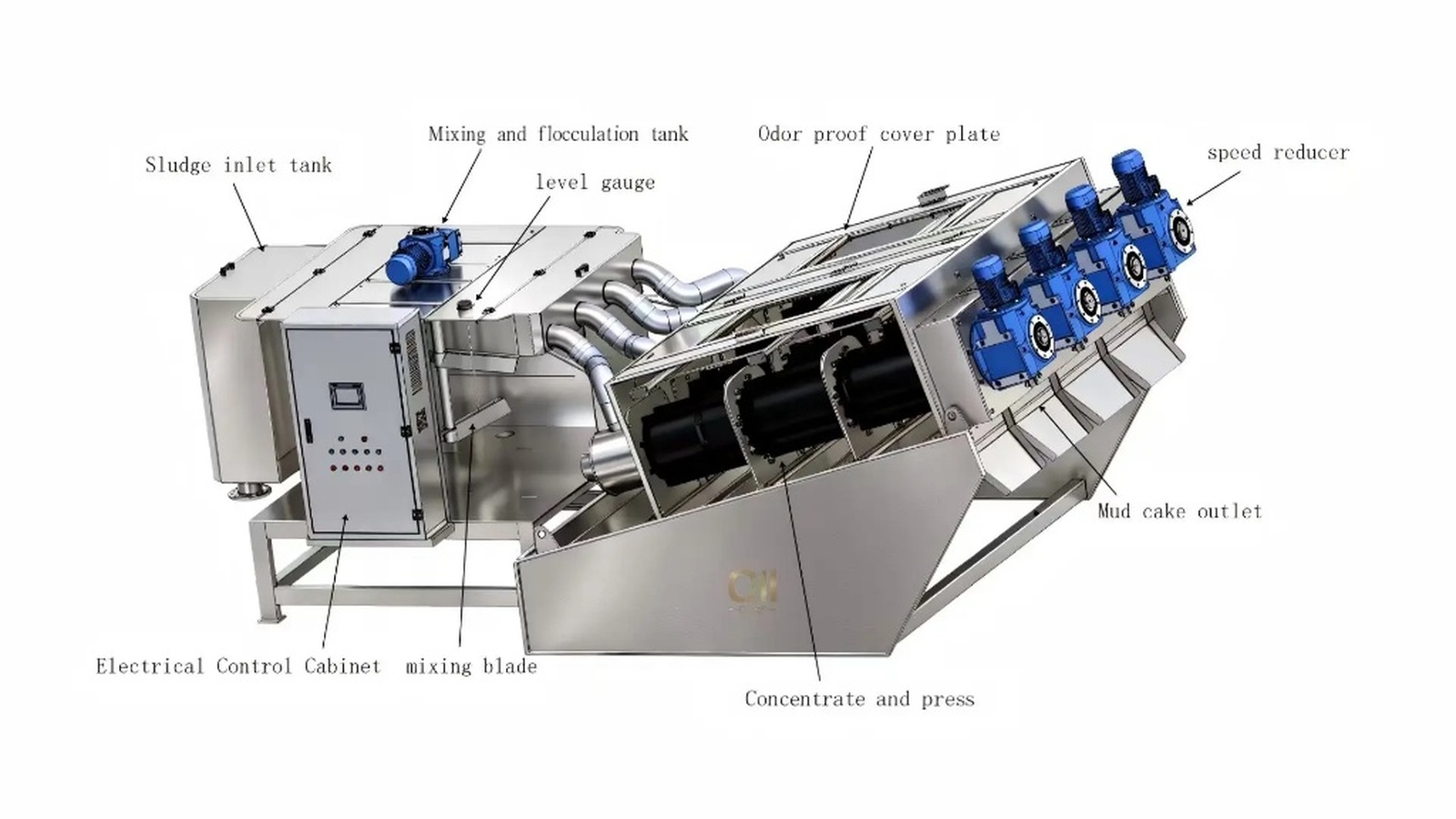
Wuxi, Jiangsu Sep 27, 2026 (Issuewire.com) - Municipal sewage treatment operations rely on stable sludge dewatering systems to achieve consistent cake solids between 75% and 80% moisture content. Efficient solid-liquid separation drastically cuts wet sludge haulage volume and reduces downstream disposal expenditures. Mechanical dewatering selection hinges on continuous structural reliability, low specific power consumption, and precise polymer flocculant dosing ratios. To satisfy continuous dewatering throughput demands while minimizing operational lifecycle costs, Danyang and international facilities require industrial-grade dewatering platforms. Headquartered in Yixing, Jiangsu--China's premier environmental protection equipment manufacturing hub--Wuxi Ouyi Environmental Protection Co., Ltd. manufactures the precision-engineered multi-disc screw press sludge dewatering machine for international wastewater treatment facilities. The company unites fluid mechanical engineering, automated laser fabrication, and cross-border project commissioning to support demanding municipal sludge reduction programs.
Selecting an optimal dewatering setup requires evaluating filtration mechanics, energy metrics, chemical dosing, footprint requirements, and wear resistance. Built upon verified manufacturing capabilities, Ouyi delivers engineered dewatering packages that align with demanding municipal operational standards through five primary technical dimensions:
High-Throughput OIDL Series Capacity: Broad multi-disc screw press lineup handling dry solids from DS 10 kg/h to 640 kg/h across 18 specialized industrial models.
Precision Ring Fabrication and Tight Tolerances: Stainless steel ring flatness held within ±0.02 mm to prevent clogging and eliminate biological floc bypass.
Three-Chamber Automated Chemical Preparation: Continuous dry powder feeding and controlled hydration maintain solution concentration accuracy within ±2%, saving 10% to 20% on polymer costs.
Compact Footprint and Civil Engineering Adaptability: Skid-mounted integration of electrical controls, flocculation tanks, and dewatering bodies occupies 1/3 to 1/5 of conventional filter press buildings.
High-Velocity Thermal Wear Coatings: High-velocity oxygen-fuel tungsten carbide coating achieves HV 1300 microhardness, providing four times the abrasion resistance of untreated steel.
Complete Municipal Sludge Dewatering Equipment Matrix and Capacity Scaling
Municipal facilities exhibit varying hydraulic flow rates and dry solids loading demands depending on their population service scale. To meet these operational requirements, complete dewatering systems incorporate four core equipment categories configured for smooth technical interaction:
OIDL Multi-Disc Screw Press Main Unit: Standardized series comprising 18 models from OIDL-131 to OIDL-404 handles dry solids from DS 10 to 640 kg/h.
Automatic Three-Chamber Polymer Preparation Unit: Continuous preparation systems with capacities from 500 to 5000 L/h feature separate dissolving, aging, and storage compartments with gravity overflow.
Enclosed Shaftless Screw Conveyor: Sealed U-trough construction moves dewatered cake directly to disposal bins, containing odors and maintaining clean plant floors.
All-Stainless-Steel Intelligent Electrical Control Cabinet: Integrated PLC architecture provides variable frequency regulation, thermal overload protection, and automated liquid level interlocking for dependable plant operations.
Precision Ring Tolerances and HVOF Tungsten Carbide Coating for Long-Term Operation
Mechanical precision directly governs filtration clarity and prevents solid carryover in municipal sludge processing. Ring components are machined from high-grade stainless steel using precision CNC lathes. Thickness tolerances are maintained within ±0.02 mm across every disc. This precise clearance uniformity maintains consistent filtrate drainage while retaining fine biological floc particles. Stress-relief heat treatment mitigates residual material tension, maintaining planar flatness throughout years of continuous rotation. Dewatering compression operates on progressive screw extrusion, generating steady mechanical pressure as the screw shaft's diameter expands while the flight pitch narrows toward the discharge end.
Screw shafts undergo high-velocity oxygen-fuel thermal spraying to resist continuous abrasive friction from mineral grit. The molten tungsten carbide powder forms a metallurgical bond with porosity below 1%. The resulting surface coating achieves a microhardness of HV 1300, extending wear life fourfold over untreated alloys. Dynamic balancing calibration minimizes rotational vibration, protecting drive motors and reduction gearboxes during continuous duty.
Automated Three-Chamber Chemical Preparation and Precision Process Control
Sludge dewatering efficiency depends on precise chemical conditioning before mechanical compression takes place. The three-chamber automated dosing system utilizes a variable-frequency stainless steel screw feeder to measure dry flocculant powder with ±2% precision. A high-frequency vibration hopper prevents powder bridging during continuous feeding. Dilution water enters through an electromagnetic flowmeter and motorized control valve, maintaining regulation accuracy within ±1%.
The horizontal three-chamber layout provides dedicated dissolving, aging, and storage stages linked by gravity overflow. Multi-stage low-speed paddle agitators provide gentle liquid blending to protect long polymer molecular chains against shear degradation. Fully programmable hydration periods from 15 to 60 minutes support thorough chemical maturation. Ultrasonic liquid sensors monitor storage levels, automatically synchronizing dosing delivery with sludge feed pumps for 24-hour unattended operation. Every unit undergoes 8 hours of continuous wet-run factory testing before shipment.
Skid-Mounted Footprint and Custom Split-Type Architecture for Plant Retrofits
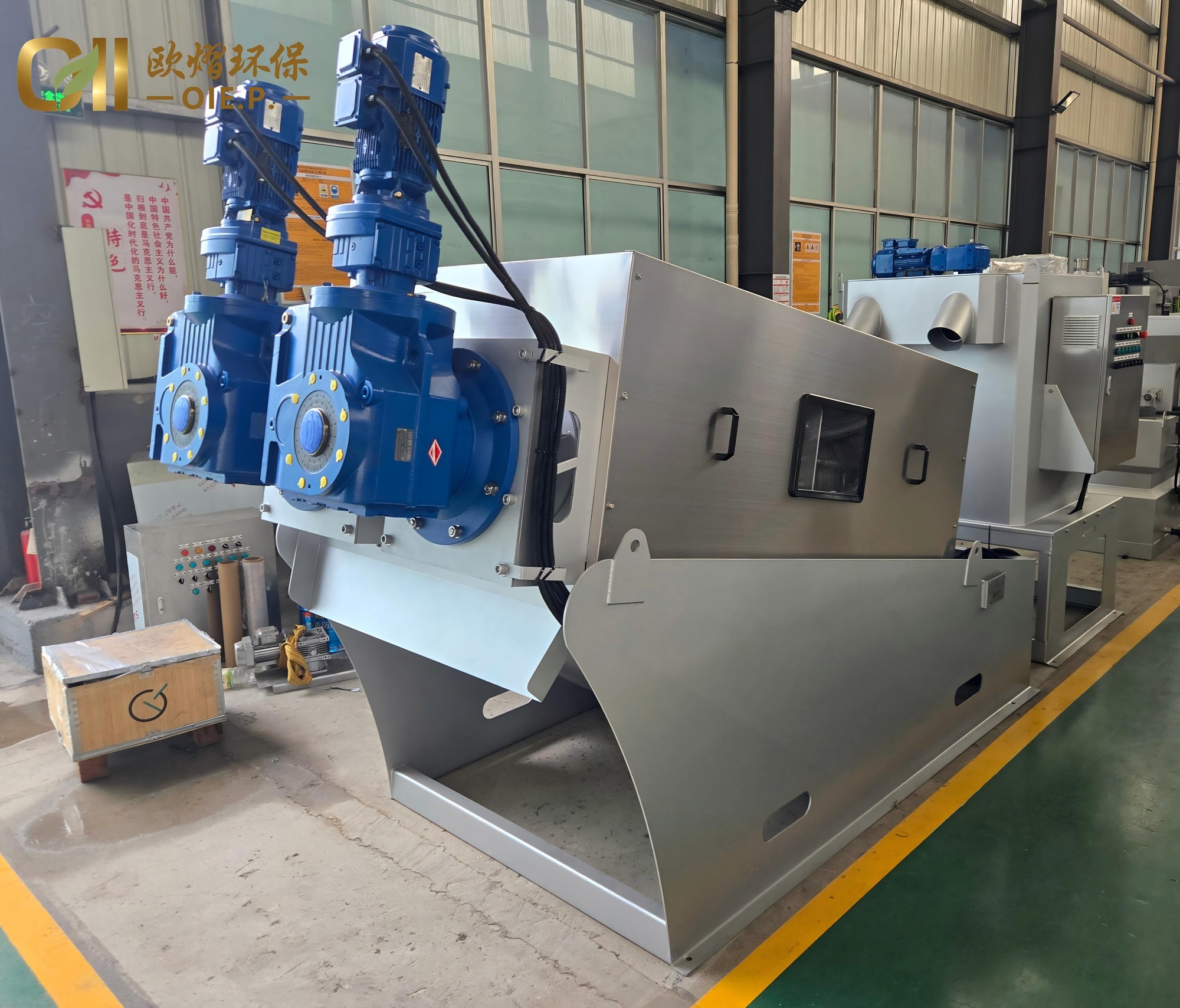
Municipal wastewater treatment plants often face spatial limitations when upgrading existing dewatering facilities. Standard OIDL multi-disc screw presses integrate electrical cabinets, flocculation mixing tanks, and dewatering drums on a single compact base frame. This skid-mounted configuration occupies 1/3 to 1/5 of the area required by conventional belt filter presses or plate-and-frame systems. Municipalities can install modern dewatering capacity within existing building footprints without constructing new facility extensions.
For installations with severe overhead restrictions or complex room geometries, custom split-type architectures provide flexible engineering options. The flocculation tank separates from the primary dewatering drum and connects through adaptable piping runs. This mechanical flexibility allows engineers to position tanks around structural columns or elevated platforms. The versatile layout accommodates diverse municipal retrofit requirements while maintaining smooth gravitational slurry transfer.
Integrated Factory Direct Sourcing Versus Fragmented Multi-Vendor Procurement
Sourcing a complete dewatering system from a single manufacturer offers distinct operational advantages over assembling components from multiple suppliers. Fragmented procurement frequently leads to mismatched sludge flow capacities, inconsistent chemical dilution ratios, and complex multi-vendor electrical integration. In contrast, an integrated equipment package aligns influent pumping, polymer maturation, screw press compression, and cake conveyance under unified engineering standards.
Direct factory supply establishes single-source technical accountability, streamlining installaton support, spare parts replenishment, and long-term service. Municipal operators achieve verified economic returns by saving 10% to 20% on flocculant chemicals. They reduce electrical power by 80% compared with centrifuges and minimize daily wash water demand. Sourcing directly from an established manufacturing base delivers reliable equipment built under ISO 9001 quality management and CE compliance standards.
Municipal Dewatering Sourcing Summary and Technical Verification
Optimizing municipal sludge dewatering requires matching plant hydraulic volumes with reliable mechanical construction, automated chemical dosing, and verified wear resistance. The OIDL multi-disc screw press series and three-chamber automatic polymer preparation systems provide municipal treatment plants with dependable, energy-efficient solid-liquid separation capabilities. Standard stainless steel metallurgy, HVOF tungsten carbide coatings, and automated control logic support dependable dewatering performance across municipal facilities.
Engineers and procurement directors can access technical datasheets, installation drawings, and factory direct quotations through the official international portal: https://www.screwpress-china.com/.
Media Contact
Wuxi Ouyi Environmental Protection Co., Ltd.
86 15852777485
No.25 Saite Avenue,GaochengTown, Yixing City,Jiangsu Province,China
Source :Wuxi Ouyi Environmental Protection Co., Ltd.
This article was originally published by IssueWire. Read the original article here.
More News











Recommended



YOUR NEWS, OUR NETWORK.
Do you have Great News you want to tell the world?
Be it updates about your business or your community, you can make sure that it’s heard by submitting your story to our network reaching hundreds of news sites across 6 verticals.